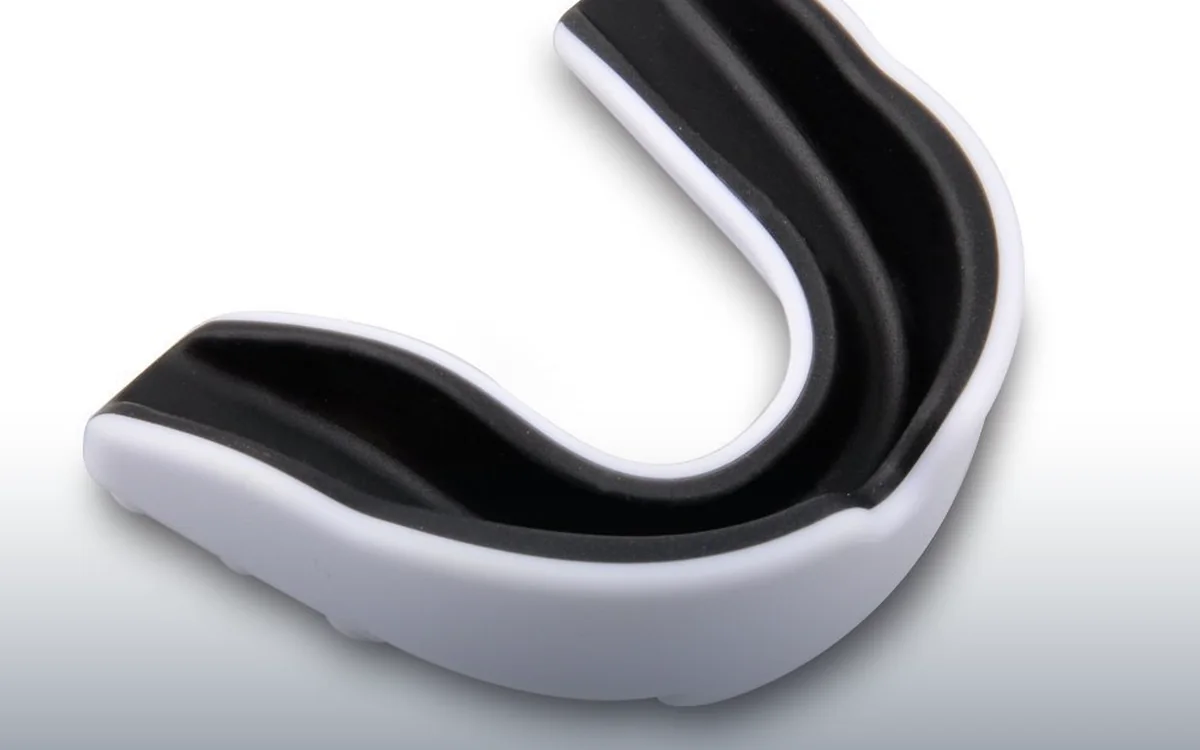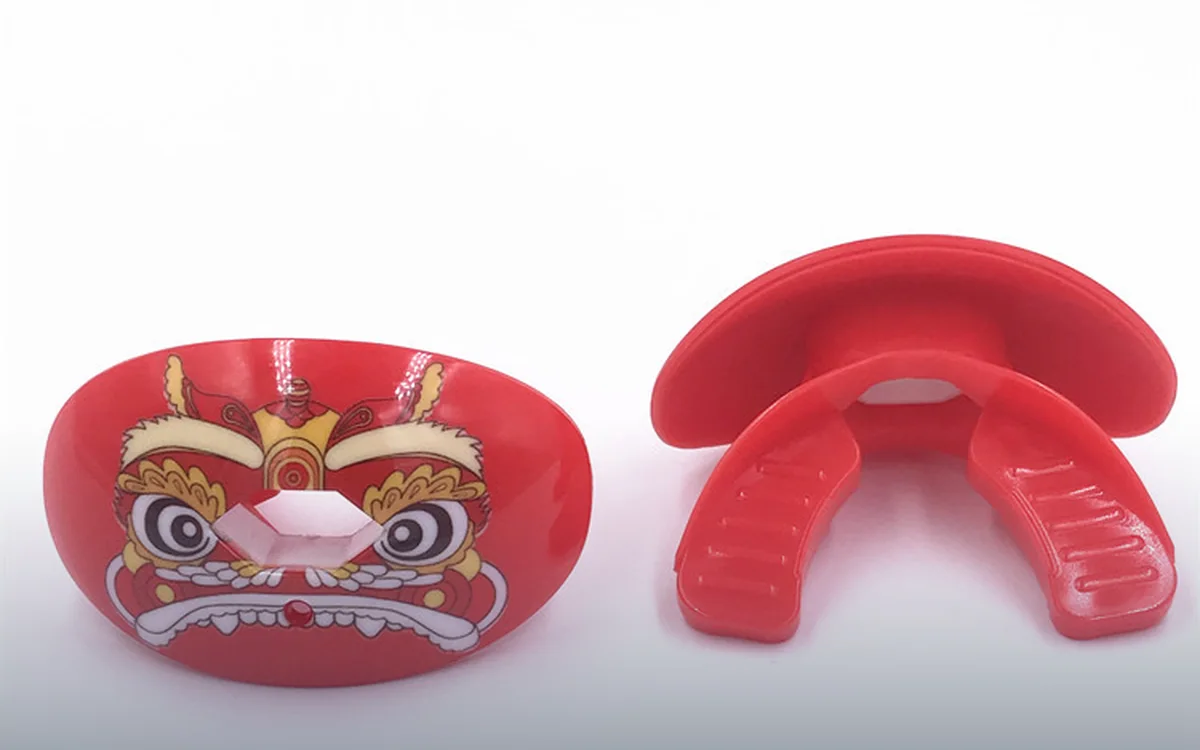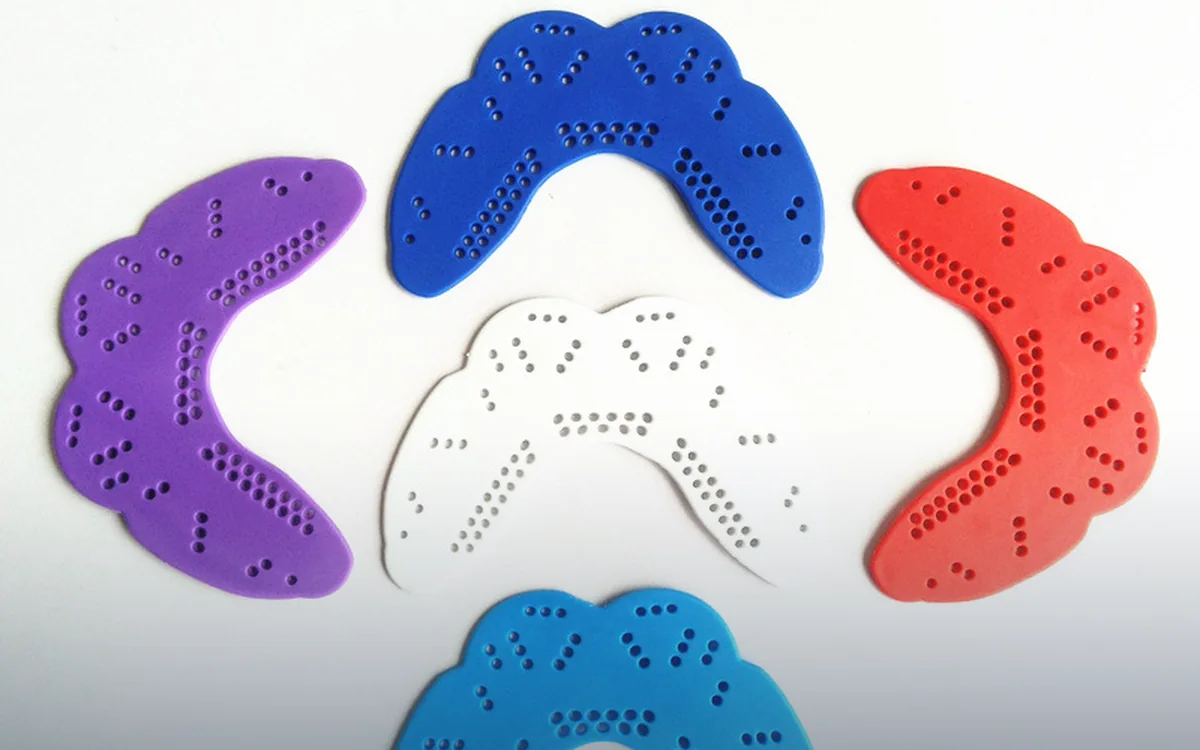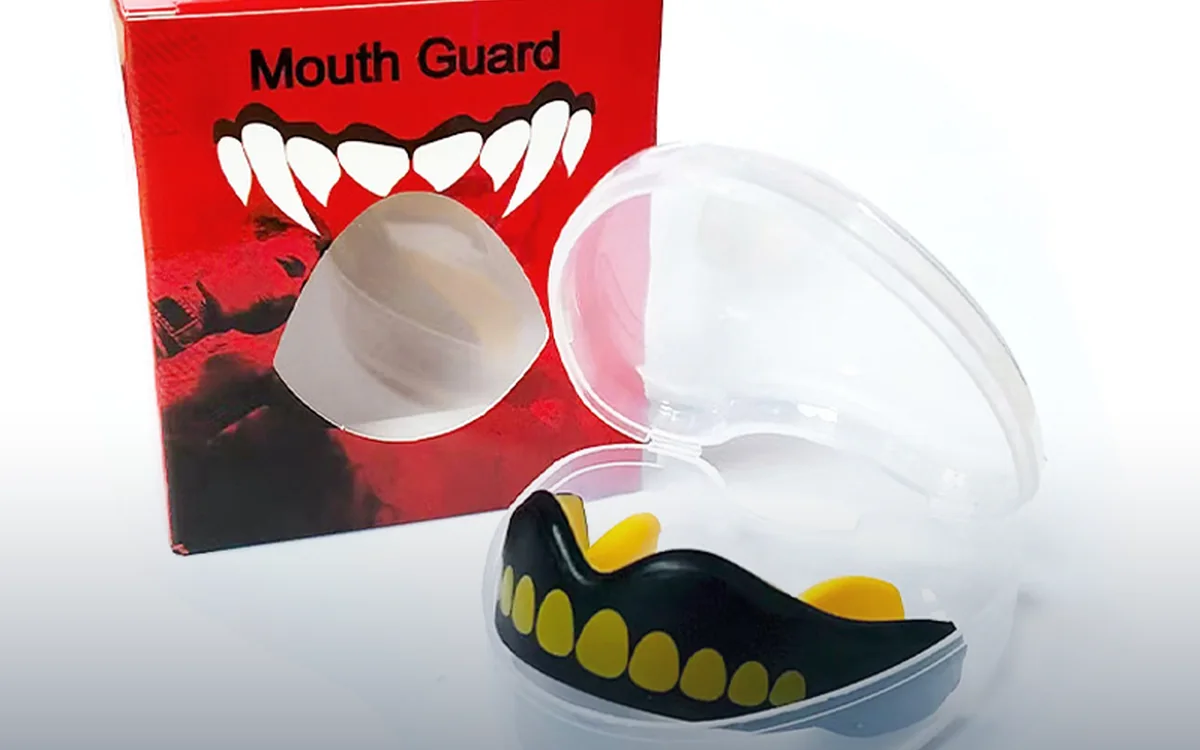
Packaging is where a private label mouth guard stops being a moulded part and starts being a product. Case, sleeve, carton and label each carry a decision that is hard to change later.
Packaging is the part of a private label mouth guard order that most buyers leave until the sample is approved, and it is the part that decides whether the product looks like a brand or like a spare part. The good news is that the structure is simple: a moulded case, a printed sleeve or box, a label panel, and a shipper carton. The work is in the order you decide them.
The four layers a retail guard ships in
Every unit you sell passes through four layers, and each one has a different minimum order and a different tooling cost:
- The case holds the guard and protects it between uses. It is a moulded part, so it carries tooling and a colour decision.
- The sleeve or box carries the brand, the claims and the barcode. It is printed, so it carries artwork and a print run.
- The label panel carries the legal text: material, size, batch, warnings and the responsible person in the market.
- The shipper carton carries 300 pcs at 30 g per guard and is the unit your freight forwarder and your marketplace both count.
Buyers who plan the case first and the artwork last usually end up with a sleeve that does not fit the case they tooled. Decide the case dimensions, then design to them.
The vented case and why the measurements matter
Our standard case is a PP vented case at 82 × 72 × 32 mm, moulded in house, with a hinge tested to 5,000 cycles. The venting is not decoration: a guard packed damp will smell by the time it reaches a shelf, and a case with no airflow holds that moisture against the shell.
The 32 mm depth is the figure to check against your artwork. A guard at 5.5 mm thickness sits inside the case with room for a folded fitting card, but not for a booklet. If your plan includes an insert, decide now whether it goes inside the case or under a sleeve, because a case that is too shallow for the insert will not close flat.
The hinge is the part that fails first in the field. A 5,000 cycle test is not a marketing line: it is the point at which a case that opens twice a week survives years of use, and it is the difference between a case that gets kept and a case that gets thrown away with the guard still inside it.
Sleeve or printed case: where the MOQ sits
A printed sleeve over a stock case is the cheapest route to a branded unit. The case stays a common part, so the tooling is shared and the colour range is set by the mould, while the sleeve carries your identity. This is also the route that suits the 50 pcs per colourway minimum, because a sleeve run can follow your colour split instead of forcing you into one colour.
A printed case, where the brand sits on the moulded part itself, is a tooling decision. It suits a range that will not change for several seasons, and it removes the sleeve from the packing line entirely. The trade is flexibility: once the case is printed, a rebrand means a new tool.
A tuck box around the cased unit is the middle option. It gives you four printed panels, a barcode on the base and a retail-ready look, and it can be opened without destroying the pack if you specify a tuck flap rather than a glued seam. It also adds a packing step, which is a real cost on a 300 pcs carton.
A gel liner or TPU tether adds a part, so decide whether it ships fitted or loose, because that changes the carton count.
What has to be on the pack
The label panel is where private label orders most often come back for a reprint. Build it from the market backwards, not from the design forwards.
| Panel element | What it must carry | Who supplies it |
|---|---|---|
| Product name and size | The size band and the age range in plain words | You, approved against the sample |
| Material statement | EVA or TPE, plus the liner and tether if fitted | Factory, from the grade record |
| Fitting temperature | 70 °C for TPE, 75 °C for EVA, stated in large type | Factory |
| Warnings | Choking hazard for small parts, adult supervision, replacement advice | You, checked by the factory |
| Batch and date code | A traceable code that links the unit to the inspection record | Factory |
| Barcode | Your EAN or UPC, at the size your printer can scan | You, artwork supplied as vector |
| Responsible person | The importer or brand address for the market you sell into | You |
The barcode is the item that delays the most orders: it is your number, it has to be in the artwork as a vector file, and a low resolution image will print with soft edges that a scanner rejects. Send the number and the file, not a photograph of an old pack.
Tuck box, sleeve or poly bag: the comparison
The choice between formats is mostly a choice about how much protection you need and how much packing labour you can absorb.
| Format | Protection | Packing step | Best for |
|---|---|---|---|
| Case only, plain | Good for the guard, weak for the brand | None | Club and school orders, bulk packs |
| Case with printed sleeve | Good, plus a clean label panel | One sleeve per unit | Retail peg ranges and marketplace listings |
| Case inside a tuck box | Strongest, and it survives a courier | One box per unit | Gift sets and boxed retail positions |
| Guard in a poly bag | Minimal | One bag per unit | Replacement units and sampler packs |
Marketplace preparation for private label orders
If the guard is going to a marketplace warehouse, the pack has to satisfy two customers at once: the shopper and the receiving line. A unit that arrives without a scannable label is checked in by hand, and a unit in a loose bag without a warning is a compliance problem rather than a packing problem.
Plan three things before the carton is sealed. The unit label goes on the outside of the pack where it can be scanned without opening anything. Loose units in a bag need the suffocation warning printed on the bag, not on a card inside it. And the shipper needs a carton label that matches the label on every unit inside, so a mixed pallet can be reconciled at the dock.
Carton weight is the other constraint. At 30 g per guard and 300 pcs per carton, the product weight is small, so the binding limit is usually the marketplace carton ceiling rather than the guard. Split the order into cartons that stay under that ceiling instead of shipping one heavy carton that gets refused.
Carton maths and freight
A carton of 300 pcs is the unit that travels, so it is the unit that carries your freight cost. The 82 × 72 × 32 mm case means the packed carton is mostly air once the units are sleeved, and air is what you pay for on a sea freight quote. If your selling unit is small, ask for the packed carton dimensions before you book, not after.
Shipping terms are FOB Shenzhen or Yantian, CIF or DDP. The choice changes who owns the risk on the water, and it changes the landed cost per unit by more than most buyers expect on a first order. Get the quote in writing against the packed carton size and the number of cartons, not against a per piece rate.
Artwork handover and reorder control
Artwork for a private label pack should arrive as print ready files with the dieline included, the barcode as vector, and the colours named against a reference rather than described. The factory should return a proof, and you should approve the proof before the print run, not after.
For the reorder, keep the approved proof, the case colour reference and the sleeve stock recorded against your account. A sleeve reprinted from a fresh file can shift shade, and the cheapest way to avoid that conversation is to reprint from the same file that produced the approved sample. Sampling takes 5 to 7 days and production takes 12 to 18 days after approval, so a packaging change made late in the cycle is the one change that can move a launch date.