Both products belong on the same shelf, but they earn their space for different reasons. Here is how fit method, fitting temperature and order size decide which one you lead with.
Most buyers approach this choice with a shelf plan and a cost sheet that already implies one product should win. In practice boil-and-bite and custom mouth guards do different jobs in the same range, and the numbers that decide which one you stock are rarely the ones printed on the front of the pack. They are the fit method, the fitting temperature, the return rate, and the amount of cash a minimum order ties up for a season.
What each product actually is
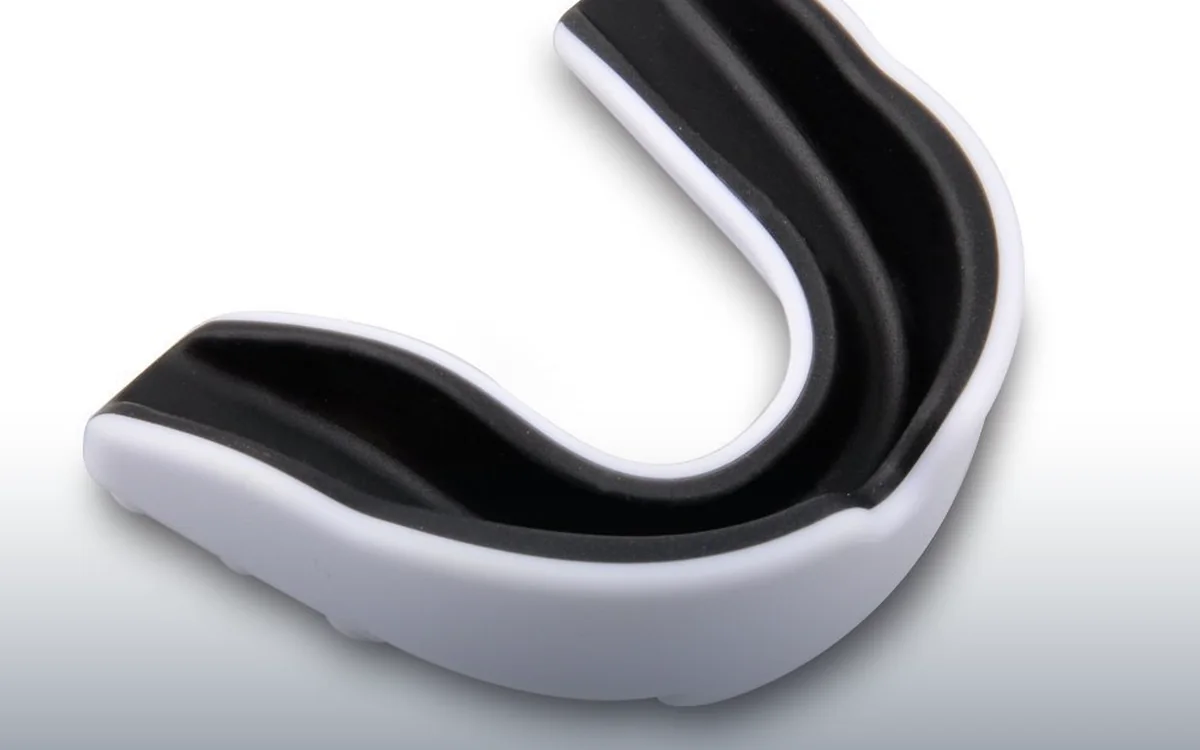
A boil-and-bite guard leaves the factory as a finished shell. You heat it, the shell softens, the athlete bites into it, and the shape sets as it cools. The fit is decided in a changing room in about a minute, by the person wearing it. The same shell can be softened and refitted a small number of times before the surface stops holding a clean impression.
A custom-fit guard is shaped on a model of that athlete's teeth. An impression or an intraoral scan goes to a lab, the model is poured, and a sheet of EVA or TPE is pulled over it under vacuum. The result follows the gum line and the biting surfaces of that one mouth instead of averaging them.
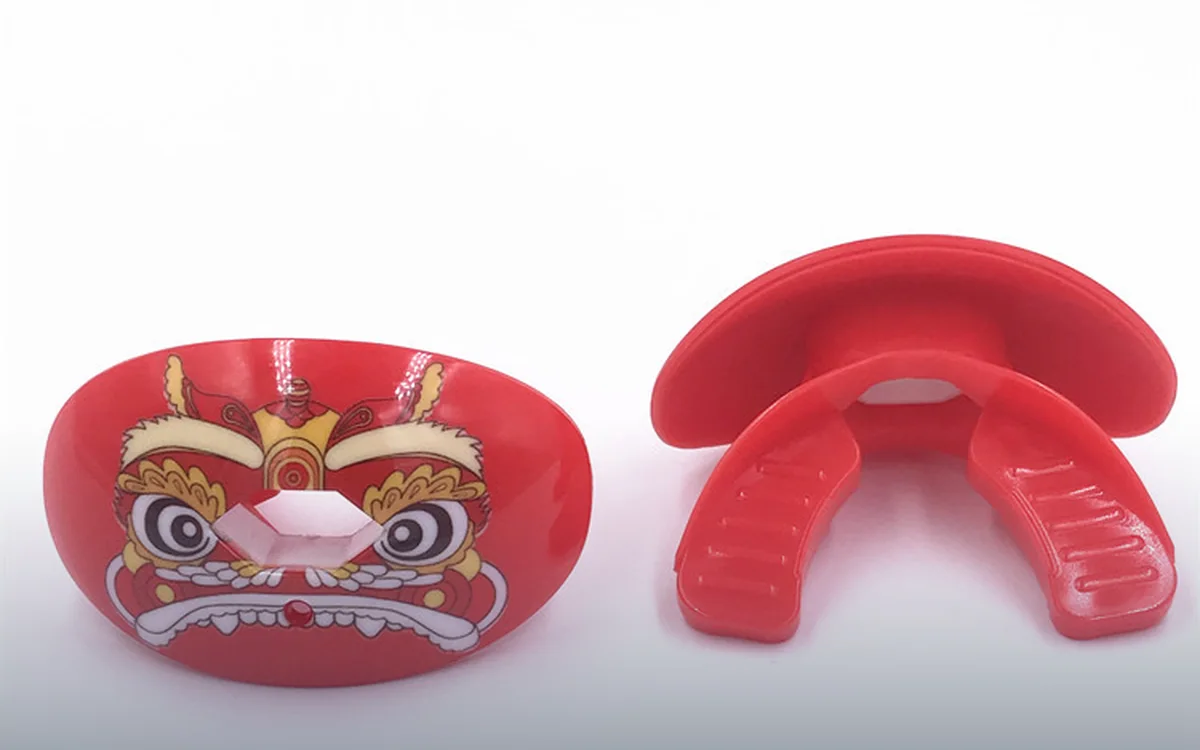
There is a third product that muddles this conversation: the custom-branded guard. It is a stock shell made in your mould, your colours and your logo, packed in your case. The fit is still boil-and-bite, but the tooling is yours and nobody else sells that shell. Most ranges that sell steadily carry a branded boil-and-bite line and a genuine custom-fit line side by side, because they answer different questions at the till.
Fitting temperature and wall thickness
Ask for the fitting temperature before you ask for a price. Our TPE shells are specified at 70 °C and our EVA shells at 75 °C. That difference sounds minor, but it decides how much margin a customer has when they use a kettle and a timer instead of a thermometer, and how the guard behaves on a second fitting.
Wall thickness sits between 3.0 and 5.5 mm. A 3.0 mm single layer is the lightest shell you can put on a peg and still describe as protective. A 5.5 mm double layer holds its shape through a second fitting, covers the molars more fully, and survives a season of training. It is also harder to bite down evenly, which is why the fitting instructions matter as much as the shell.
Thickness drives cost twice: once in material, at 30 g per guard, and once in cycle time on the press, because a thicker sheet needs longer to heat through. A thinner shell is not half the cost of a thick one, but it is measurably cheaper per piece and noticeably cheaper per carton.
Where the cost sits in each product
In a boil-and-bite guard, cost is material, moulding time, the vented case and the printed sleeve. In a custom-fit guard, cost is labour: impression handling, model pouring, trimming, polishing and the individual check before packing. That is why a custom guard has a much higher price floor and a much lower ceiling on volume per order.
| Cost line | Boil-and-bite | Custom fit |
|---|---|---|
| Shell material | 30 g per guard, one or two layers | Same sheet, more waste at trimming |
| Labour | Minutes per unit at packing | Impression, model, trim and polish |
| Case | Vented PP case included | Usually supplied without a case |
| Tooling | One mould per shell size | No shell mould, one model per athlete |
| Inspection | Carton sample at AQL 2.5 | Individual check per unit |
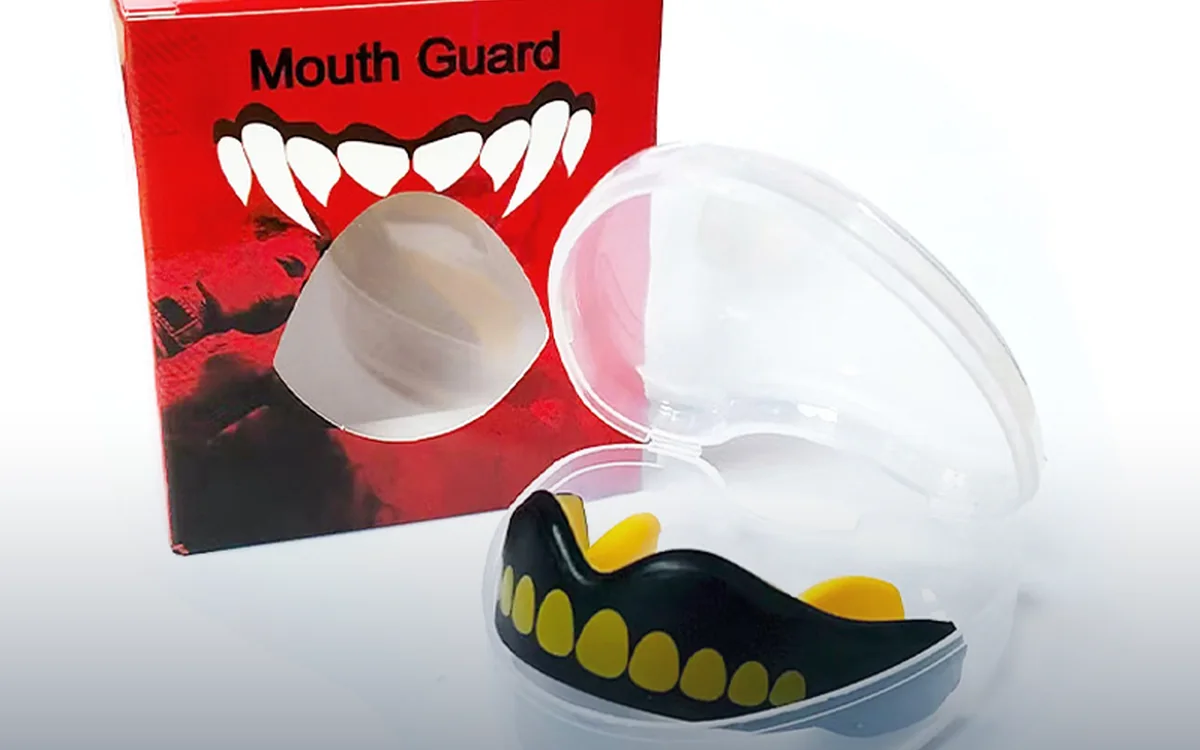
For a private label range, the practical way to hold cost down is to standardise the case and vary the sleeve. The case is a moulded part at 82 × 72 × 32 mm with a 5,000 cycle hinge, so it rewards one tool and one colour family. The sleeve is printed board, so it can change every season without new tooling.
Add freight and the comparison shifts again. A carton of 300 pcs at 30 g per guard is light enough that the freight cost per unit is driven by the case and the sleeve rather than by the shell, so a thicker double-layer guard costs less to ship than a second carton of thin ones.
Return rates and the complaints you can prevent
Returns on boil-and-bite guards cluster around three causes: a customer who did not follow the fitting steps, a customer who expected a custom fit at a retail price, and a customer who chewed through a thin shell in a few weeks. None of those are shell defects, and all three are preventable with better packaging copy and a clearer thickness story.
Returns on custom guards cluster differently: a poor impression, a guard that was trimmed too short at the back, or a fit that was never checked at the chair. Those are process failures in the lab, and they are expensive because the product cannot be resold.
- State the fitting temperature in large type on the sleeve, not in a paragraph at the back.
- Show the millimetre figure for wall thickness so the buyer can compare like with like.
- Include a fitting card with a timing step, because most failures are impatience rather than technique.
- Say who the guard is for: age band and sport, in the first line of copy.
Who buys which: a segment view
The two products pull different customers, and the split is fairly stable across the markets we ship to. The table below is the version we use when a buyer asks us to recommend a starting range.
| Customer | What they buy | Why | What they complain about |
|---|---|---|---|
| Parent buying for a junior player | Boil-and-bite, single layer, small size | Price and the ability to refit at home | Fitting instructions, not the shell |
| Adult club player, weekly training | Boil-and-bite, double layer | Comfort over a full session | Thickness and speech |
| Competitive athlete | Custom fit, made by a lab | Fit and retention under load | Turnaround time |
| School or club buyer | Branded boil-and-bite in team colours | Uniform look and a simple order | Colour matching between batches |
| Gym or combat sports retailer | Boil-and-bite, gel liner | Fast replacement and low price | Case loss, not the guard |
MOQ, cartons and the cash on the shelf
The minimum order is 100 pcs per style, with 50 pcs per colourway. That split matters more than the headline number: a four-colour range is 200 pcs minimum, not 100. Cartons hold 300 pcs at 30 g per guard, so a first order of 300 pcs is one carton, one freight line and one inspection.
Do the cash maths before you choose the range width. A narrow range of 100 pcs in one colour sells through faster per SKU than 400 pcs spread across four colours, and the reorder is what proves the product works. If your shelf cannot support 50 pcs of a colour, do not list that colour.
Sampling, production and reorder consistency
Sampling runs 5 to 7 days, and production runs 12 to 18 days after you approve the sample. Approve a sample that is physically identical to what you expect in bulk: same material grade, same thickness, same case, same sleeve artwork. If the sample arrives without a sleeve, the sleeve is unapproved by default.
For reorders, fix the grade and the colour reference in writing. Colour is the most common drift between batches, and the cost of a mismatch lands on the retailer who has to explain two shades of the same product on one shelf. We hold the approved sample and the grade record against your order, and the pre-shipment inspection runs at AQL 2.5.
Stocking both without doubling the risk
The lowest-risk way to run both products is to lead with the boil-and-bite line at full range width and add custom fit as a service, not as stock. Custom fit has no shelf presence to manage and no colour to match, and it converts the customer who was going to walk out because the retail shell felt loose.
If you want to test the water before committing to a mould, ask for a sample in your colours with a plain case and a printed sleeve. That gives you a sellable unit without a tooling invoice, and it tells you within one season whether the range deserves the second layer.