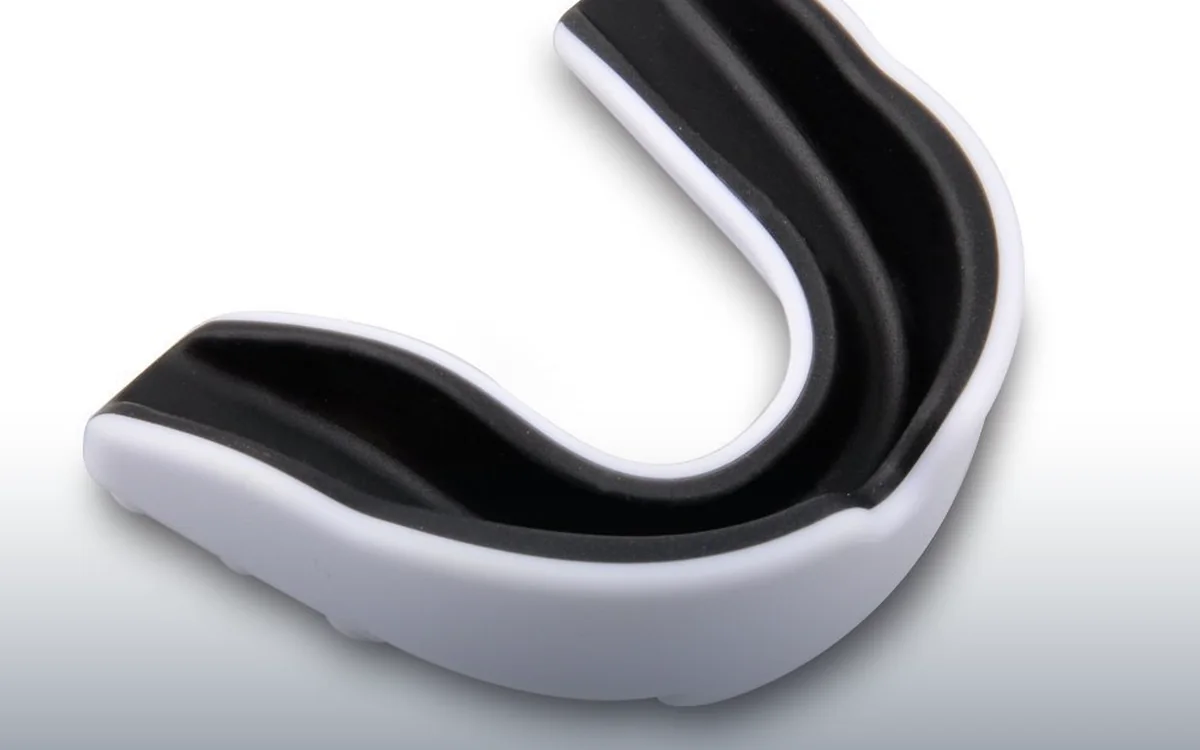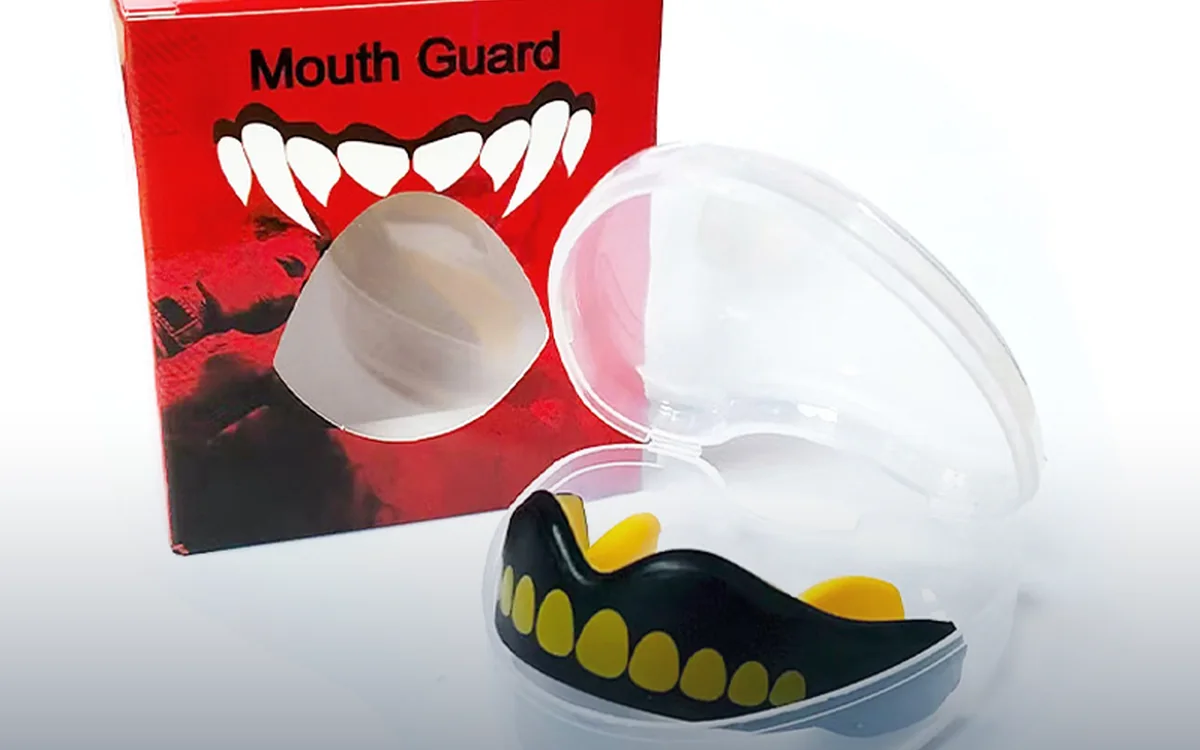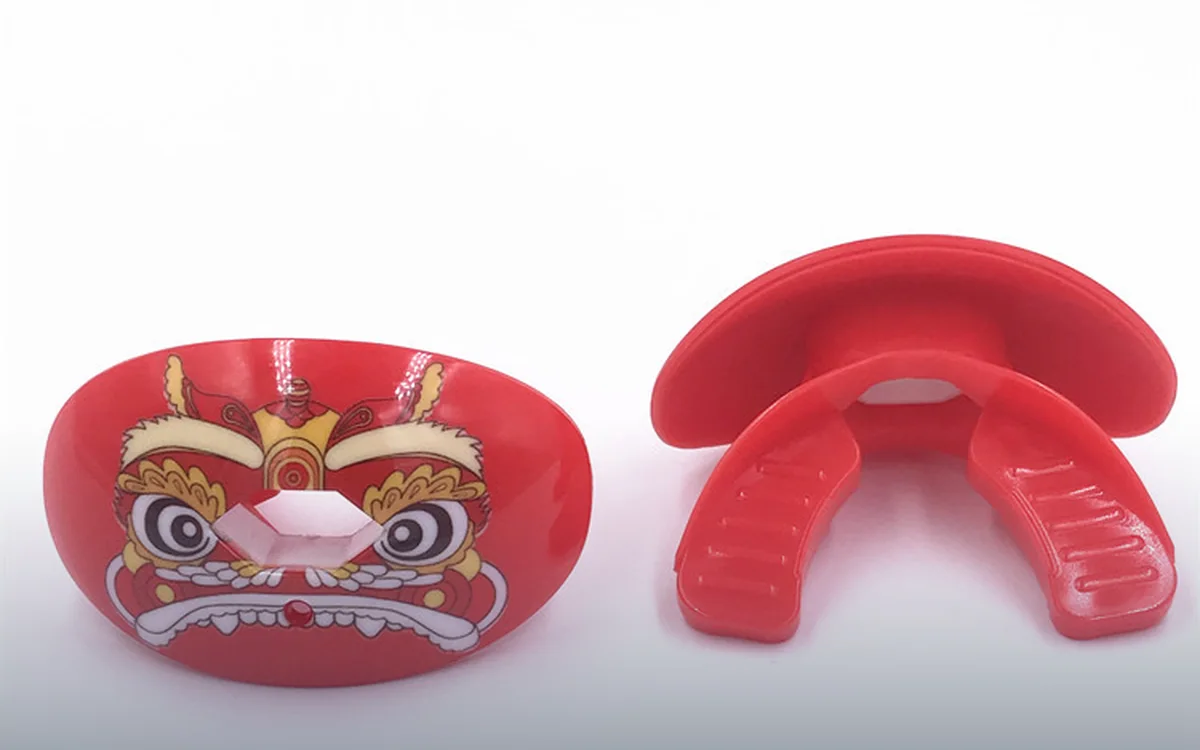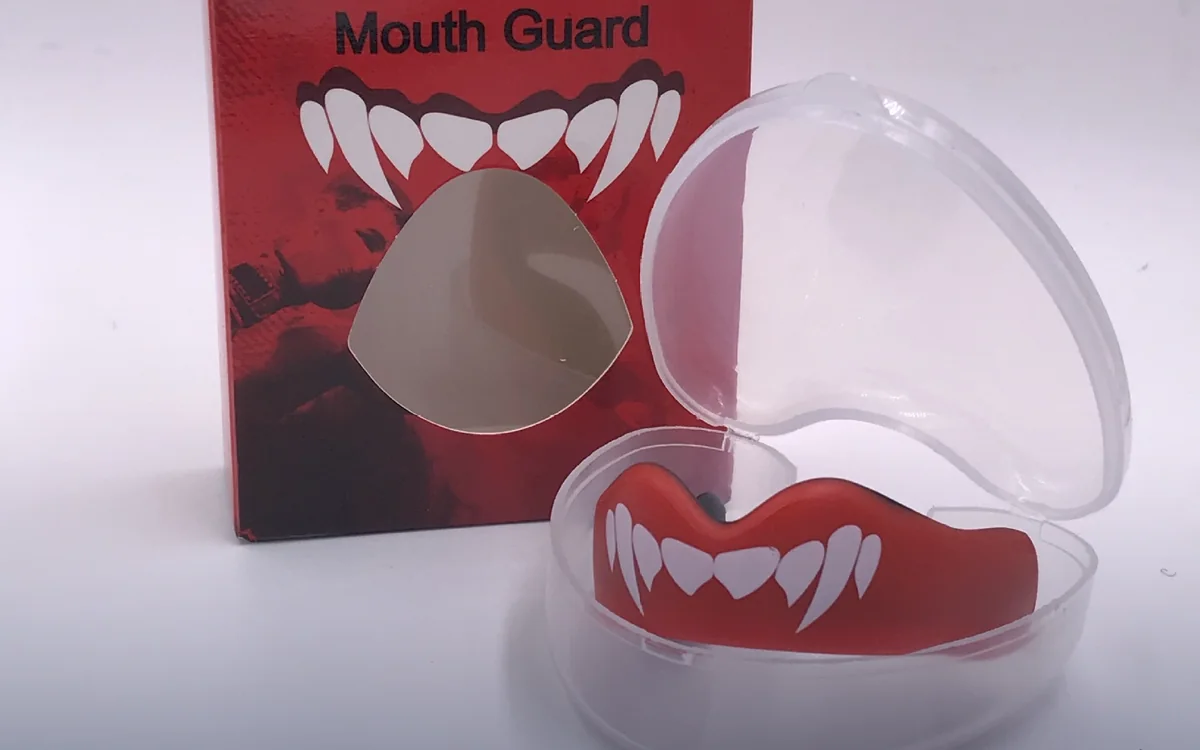
Most sourcing problems start before the first sample, when quotations are compared without comparing what sits inside them. These eight checks decide whether a factory can hold a specification across 500 pieces or 5,000.
A mouth guard is a small part of a sports kit and a large part of a factory relationship. The part is a moulded shell that has to fit an athlete's teeth, survive a season of use and arrive in a case that closes. Most sourcing problems start before the first sample, when buyers compare quotations without comparing what sits inside them, and they surface again at the reorder when the second batch reads slightly different from the first. The checks below are the ones that decide whether a supplier can hold a specification across 500 pieces or 5,000.
1. Confirm what the factory actually moulds
EVA and TPE guards are thermoplastic parts. They are formed, trimmed and packed on the same kind of line, and their fitting temperatures sit close together at 75 °C for EVA and 70 °C for TPE. Silicone is a thermoset: different tooling, different curing, different scrap handling. A factory that quotes all three materials is usually buying one of them in, and a bought-in part adds a QC gate you cannot see. Ask which lines run under one roof before you compare unit prices.
Then ask for the material list in the same email. Food-grade EVA, TPE, transparent EVA, a gel liner and a TPU tether are five separate supply chains. A supplier that cannot name the grade behind each one is quoting from memory, and memory does not survive a reorder six months later. Ask too whether the case is moulded in house, because a bought-in case can change colour between batches without anyone telling you.
2. Ask who owns the mould
Tooling ownership is the cheapest question you will ever ask and the most expensive one to skip. If the factory pays for the tool, the factory owns it and your design stays where it is. If you pay for the tool, you own it, and you can move it to a second source when you need a second source. Write the answer into the quotation, not into a conversation.
Ask how many moulds the factory already holds and whether any of them cover your size range. A supplier with 260+ moulds on file can often sample your guard without cutting new steel, which is the difference between a 5–7 day sample round and a month of waiting. Also ask how the tool is maintained and how many cavities it runs, because cavity count drives both cycle time and the spread of wall thickness across a batch.
3. Put sample approval in writing
Samples arrive in 5–7 days. What matters is what you sign when they do. A sample approval sheet should record the material grade, the fitting temperature with a tolerance either side, wall thickness measured at three points within the 3.0–5.5 mm range, colour against a physical swatch rather than a screen, the case at 82 × 72 × 32 mm, and the tether pull. Photographs are not a reference standard; a retained physical sample is.
Keep two approved samples: one for the factory file, one for your office. When a claim comes in, the argument is about a measurement against a known part, not about how the last batch looked in a photograph. If a supplier cannot tell you which measurement will be checked at inspection, the approval sheet is decorative.
4. Check the QC plan, not the certificate wall
Every factory has a folder of paperwork. Fewer have a written inspection plan tied to a measurable limit, and that plan is what protects you at the third reorder. Ask for the AQL level, the inspection points and the sample size, then ask who signs the report and whether you receive a copy before the balance payment.
| Check | Method | What it catches |
|---|---|---|
| Wall thickness | Three points per guard against a 3.0–5.5 mm window | Thin sections that tear at the molar edge |
| Guard weight | Scale check against the 30 g nominal | Short shots and quiet material substitution |
| Fit and trim | Seat on the master model, run a finger along the edge | Flash, sharp trim lines, distortion after cooling |
| Case hinge | 5,000 open and close cycles | Hinge cracking before the season ends |
| Case print | Rub test and colour match to the approved swatch | Logo wear during shipping and retail handling |
| Carton count | Count 300 pcs per carton, then weigh the box | Short packing that only shows up at the retailer |
| Seal and label | Scan the barcode, read the warning panel | Rejected shipments at the destination warehouse |
| Retained sample | One sealed guard per lot, stored with the batch record | Disputes that arrive six months after delivery |
Inspection at AQL 2.5 is a working limit, not a guarantee that every unit is perfect. It is statistically designed to catch a process that has drifted, which is exactly the failure mode you care about when a factory runs 300,000 pcs a month across many accounts.
5. Read the production calendar before you trust the lead time
Production runs 12–18 days after sample approval. That number is real only if your order is in the queue, so ask where it sits and what sits in front of it. A factory with 120+ workers and capacity of 300,000 pcs a month can absorb a 5,000 piece order quickly; the same factory in the week before a public holiday cannot absorb anything.
Ask for the calendar in writing with the two dates that matter: the day production starts and the day the goods are ready for the forwarder. Add a buffer of your own between the second date and the date your customer expects stock, and treat any supplier who resists giving dates as a supplier who has not planned the run.
6. Test reorder consistency before you need it
Reorders fail quietly. The material is close but not identical, the colour drifts half a shade, the case arrives in a slightly different plastic, and nobody notices until a customer does. The way to prevent it is to lock the variables in the purchase order and keep a physical sample of every lot. The table below is the short version that belongs on page two of every order.
| Variable | What to write on the order | Where a drift shows up first |
|---|---|---|
| Material | Grade name, supplier, retained sample of the approved lot | Fitting behaviour and edge softness |
| Colour | Masterbatch code plus a physical swatch, never a hex value | Team sets that no longer match across sizes |
| Mould | The mould number your part runs in | A new tool appearing without a new approval |
| Case | Colour, print position, 82 × 72 × 32 mm envelope | Guards that fit arriving in cases that do not close |
| Packing | 300 pcs per carton, carton size, label layout | Warehouse counts that never reconcile |
| Lot record | Batch code on the carton and in the packing list | Claims you cannot trace back to a run |
7. Watch for the red flags
Most bad suppliers reveal themselves in the first two emails, and the signals repeat across the trade.
- A quotation with a price but no material grade, no wall thickness and no packing line.
- An MOQ promise below 100 pcs per style, which usually means the order will be filled from stock rather than made for you.
- No fitting temperature stated, so you cannot write an instruction panel a customer can follow.
- No AQL level and no inspection report offered before balance payment.
- Case dimensions described as standard rather than measured, which is how a guard that fits arrives in a case that does not close.
- A sample that arrives without the material datasheet that belongs with it.
8. Get the commercial terms onto one page
The commercial terms should fit on a single page and should be identical in the quotation and the proforma invoice. Ask what the sample fee is and whether it is credited against the bulk order. Ask who pays for the mould if the design changes after the first round, and who pays the freight if the forwarder books the wrong sailing.
| Term | What it covers | Who carries the risk |
|---|---|---|
| MOQ | 100 pcs per style, 50 pcs per colourway | Buyer, at the point of order |
| Sampling | 5–7 days from artwork and mould confirmation | Factory, until the sample is approved |
| Production | 12–18 days after sample approval | Factory, with a written ship date |
| Payment | 30% deposit, 70% against pre-shipment inspection at AQL 2.5 | Buyer, until the inspection passes |
| Shipping | FOB Shenzhen or Yantian, CIF, or DDP to your door | Depends on the term you sign |
| Response | 6 working hours on any enquiry or query | Factory, measured over the first week |
None of these checks requires a factory visit. They require a buyer who compares like with like, keeps a physical sample and writes the specification down. Send a reference guard with your target quantity and market, and we will tell you which mould it would run in, what the sample would test and where the cost actually sits.